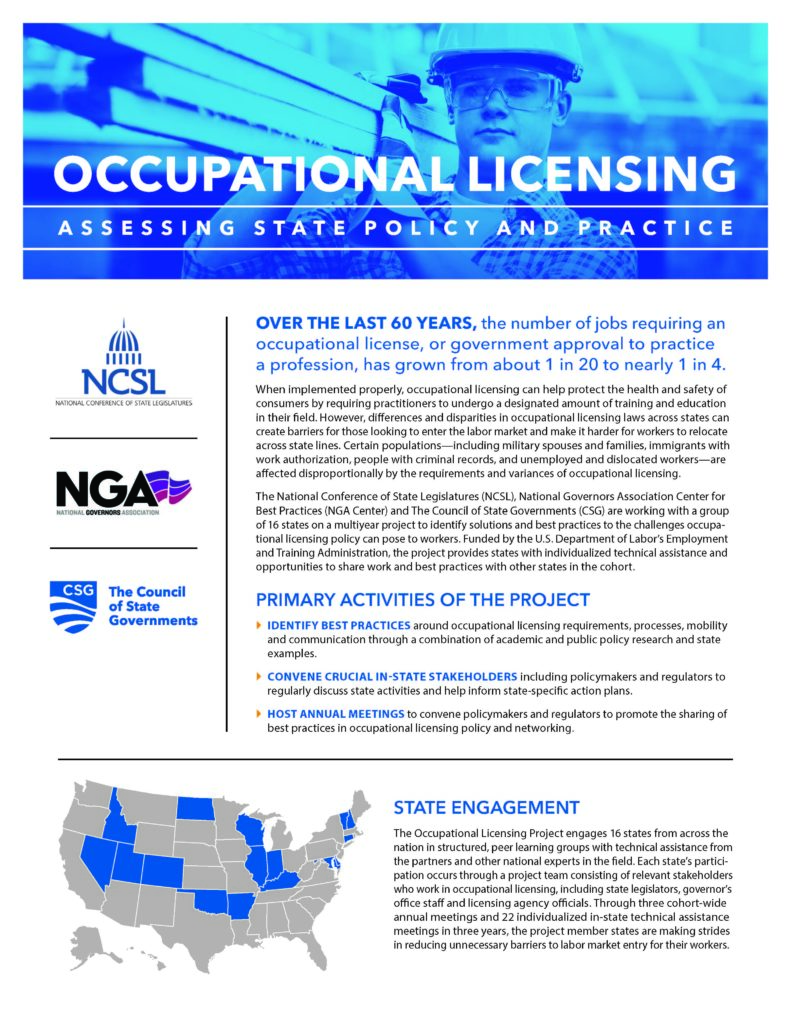
Over the last 60 years practice a profession, has grown from about 1 in 20 to nearly 1 in 4. When implemented properly, occupational licensing can help protect the health and safety of consumers by requiring practitioners to undergo a designated amount of training and education in their field. However, differences and disparities in occupational licensing laws across states can create barriers for those looking to enter the labor market and make it harder for workers to relocate across state lines. Certain populations—including military spouses and families, immigrants with work authorization, people with criminal records, and unemployed and dislocated workers—are affected disproportionally by the requirements and variances of occupational licensing